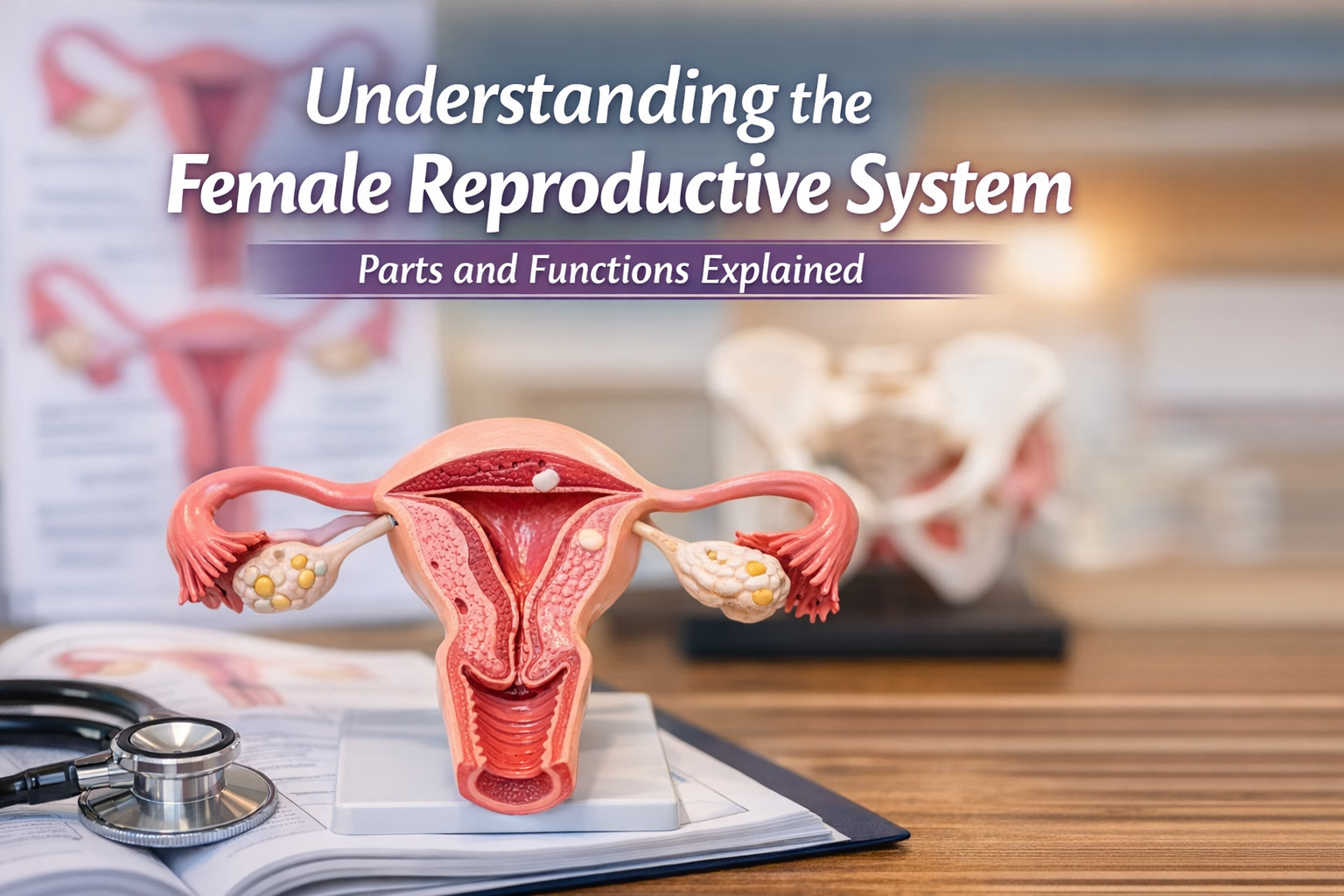
The human body is a complex and fascinating system, and among its most intricate structures is the female reproductive system. It plays a vital role not only in reproduction but also in maintaining hormonal balance and overall health. Understanding the structure and purpose of each component helps students, healthcare professionals, and even the general public gain deeper insight into how the body functions.
In this guide, we’ll explore the female reproductive system parts and functions in a clear, simple, and informative way, while highlighting why this knowledge is essential in both education and clinical practice.
Overview of the Female Reproductive System
The female reproductive system consists of both internal and external organs that work together to enable reproduction, menstruation, and hormonal regulation. These organs are responsible for producing eggs (ova), supporting fertilization, and nurturing the development of a fetus during pregnancy.
The system can be broadly divided into:
- External reproductive organs (vulva)
- Internal reproductive organs (ovaries, fallopian tubes, uterus, cervix, and vagina)
Each part has a specific role, and their coordinated function is essential for reproductive health.
External Reproductive Organs (Vulva)
The external portion of the female reproductive system is collectively known as the vulva. It includes several important structures:
Labia Majora and Labia Minora
These are folds of skin that protect the inner structures of the reproductive system. The labia majora are the outer folds, while the labia minora lie inside and help protect the vaginal opening and urethra.
Clitoris
The clitoris is a highly sensitive organ that plays a key role in sexual arousal. It contains a large number of nerve endings and is an important part of sexual health and pleasure.
Vaginal Opening
This is the entrance to the vagina, serving as the passage for menstrual flow, sexual intercourse, and childbirth.
Internal Reproductive Organs
Ovaries
The ovaries are small, almond-shaped glands located on either side of the uterus. Their primary functions include:
- Producing eggs (ova)
- Releasing hormones such as estrogen and progesterone
Each month, one ovary releases an egg during ovulation, which is a key part of the reproductive cycle.
Fallopian Tubes
The fallopian tubes are narrow tubes that connect the ovaries to the uterus. Their main functions include:
- Transporting the egg from the ovary to the uterus
- Serving as the site where fertilization typically occurs
If sperm meets the egg in the fallopian tube, fertilization can take place, leading to pregnancy.
Uterus
The uterus is a pear-shaped organ where a fertilized egg implants and develops into a fetus. Its functions include:
- Supporting fetal growth during pregnancy
- Shedding its lining during menstruation if fertilization does not occur
The inner lining of the uterus, called the endometrium, thickens each month in preparation for a possible pregnancy.
Cervix
The cervix is the lower, narrow part of the uterus that connects to the vagina. It acts as a gateway between the uterus and the outside world. Key roles include:
- Allowing menstrual blood to exit the body
- Permitting sperm to enter the uterus
- Dilating during childbirth to allow the baby to pass through
Vagina
The vagina is a muscular canal that connects the cervix to the outside of the body. It serves multiple functions:
- Receiving sperm during intercourse
- Acting as the birth canal during delivery
- Allowing menstrual flow to leave the body
Hormonal Regulation and Its Importance
The female reproductive system is closely regulated by hormones, primarily estrogen and progesterone. These hormones control the menstrual cycle, ovulation, and pregnancy.
The menstrual cycle typically lasts around 28 days and involves several phases:
- Menstrual phase – shedding of the uterine lining
- Follicular phase – preparation of an egg in the ovary
- Ovulation – release of the egg
- Luteal phase – preparation for possible pregnancy
Hormonal balance is crucial for maintaining reproductive health. Any disruption can lead to conditions such as irregular periods, infertility, or hormonal disorders.
Why Understanding Reproductive Anatomy Matters
Knowledge of reproductive anatomy is essential for several reasons:
Education and Awareness
Understanding how the body works empowers individuals to make informed decisions about their health and well-being.
Clinical Training
Medical students and healthcare professionals rely on detailed anatomical knowledge to diagnose and treat conditions effectively. High-quality learning resources, such as anatomical models and guides, are often used to enhance this understanding. For a deeper dive into female reproductive system parts and functions, specialized medical training materials can provide valuable visual and practical insights.
Early Detection of Health Issues
Familiarity with the reproductive system helps in recognizing symptoms of potential health problems, such as:
- Ovarian cysts
- Endometriosis
- Cervical cancer
- Hormonal imbalances
Early detection often leads to better treatment outcomes.
Common Disorders of the Female Reproductive System
While the reproductive system is highly efficient, it can also be affected by various conditions. Some common issues include:
Polycystic Ovary Syndrome (PCOS)
A hormonal disorder that can affect ovulation and lead to irregular menstrual cycles.
Endometriosis
A condition where tissue similar to the uterine lining grows outside the uterus, causing pain and potential fertility issues.
Fibroids
Non-cancerous growths in the uterus that can cause heavy bleeding and discomfort.
Infections
Sexually transmitted infections (STIs) can affect reproductive organs and lead to complications if untreated.
Regular medical check-ups and awareness are key to managing and preventing these conditions.
Maintaining Reproductive Health
Keeping the reproductive system healthy involves a combination of lifestyle choices and medical care:
- Regular gynecological check-ups
- Maintaining a balanced diet
- Practicing safe sex
- Staying physically active
- Managing stress levels
Education plays a crucial role in prevention and early intervention, making it easier to maintain long-term health.
Final Thoughts
The female reproductive system is a remarkable and complex network of organs working together to support life and overall well-being. By understanding its structure and function, individuals can take proactive steps toward better health, while medical professionals can improve diagnosis and treatment.
Whether you’re a student, healthcare provider, or simply someone interested in human biology, learning about reproductive anatomy provides valuable insights into one of the most essential systems in the human body.