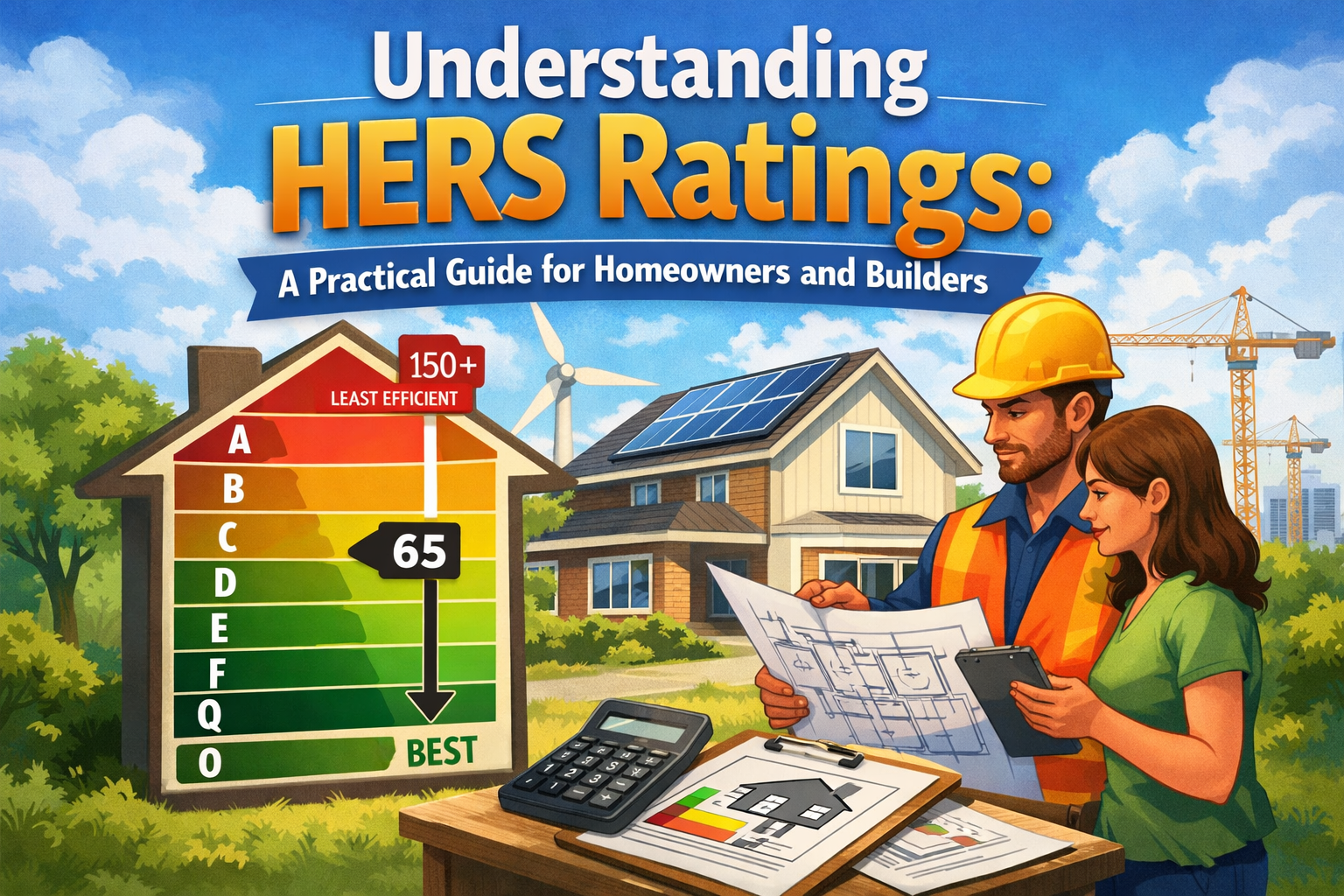
Energy efficiency has become one of the most important considerations in modern home construction and renovation. Rising energy costs, environmental awareness, and new building standards are pushing homeowners and builders alike to think more carefully about how homes consume energy. One tool that plays a key role in evaluating a home’s energy performance is the Home Energy Rating System, commonly known as a HERS rating.
Whether you’re building a new home, buying property, or improving an existing one, understanding how HERS ratings work can help you make smarter decisions about efficiency, comfort, and long-term savings.
What Is a HERS Rating?
A HERS rating is an industry-recognized scoring system used to measure a home’s energy efficiency. Developed by the Residential Energy Services Network (RESNET), the system compares a home’s energy performance against a reference home built to standard code specifications.
The HERS Index uses a numeric scale:
-
100 represents the energy use of a standard new home.
-
0 represents a net-zero energy home.
-
Lower scores indicate better efficiency.
For example:
-
A home with a HERS score of 70 is roughly 30% more energy-efficient than a typical new home.
-
A home with a score of 50 uses about 50% less energy.
Because the scale is consistent across the industry, HERS ratings provide a clear and reliable way to compare different homes.
Why HERS Ratings Matter
Energy efficiency affects far more than just utility bills. A well-performing home delivers multiple long-term benefits.
1. Lower Energy Costs
Homes with lower HERS scores consume less electricity and fuel for heating, cooling, and everyday use. Over time, this translates into significant financial savings for homeowners.
2. Improved Comfort
Energy-efficient homes typically maintain more stable indoor temperatures. Proper insulation, air sealing, and optimized HVAC systems reduce drafts, temperature swings, and humidity problems.
3. Higher Property Value
Energy performance is increasingly becoming a selling point in real estate. Buyers are paying more attention to operating costs and sustainability, making efficient homes more attractive in competitive markets.
4. Compliance With Building Programs
Many building programs require or reward strong HERS scores, including:
-
Energy-efficient construction certifications
-
Green building initiatives
-
Utility rebate programs
-
Energy-efficient mortgage qualifications
Because of this, builders often rely on HERS ratings to demonstrate compliance with modern efficiency standards.
What Happens During a HERS Rating Assessment?
A certified HERS rater evaluates a home through a series of inspections, measurements, and performance tests. These assessments help determine how efficiently the building uses energy.
The process typically includes:
-
Reviewing construction plans
-
Inspecting insulation levels
-
Checking window performance
-
Evaluating HVAC equipment
-
Testing air leakage
-
Performing duct leakage tests
-
Conducting a blower door test
Key Components Evaluated
Several factors heavily influence a home’s final score.
Insulation and Thermal Envelope
Proper insulation in walls, attics, and floors helps prevent heat loss in winter and heat gain in summer.
Air Tightness
Air leaks can significantly reduce energy efficiency. Blower door testing measures how much air escapes through cracks, gaps, and poorly sealed areas.
HVAC Efficiency
Heating and cooling systems account for a large portion of household energy use. Modern high-efficiency equipment can dramatically improve performance.
Windows and Doors
Energy-efficient windows with proper sealing help maintain indoor temperatures and reduce heating and cooling demand.
Duct System Performance
Leaky ductwork can waste significant energy by sending conditioned air into attics, crawlspaces, or wall cavities.
HERS Ratings for New Construction
For new homes, HERS ratings are often integrated into the construction process from the beginning. Builders work with energy raters to model the home’s projected energy performance before construction begins.
This approach provides several advantages:
-
Builders can identify efficiency improvements early.
-
Cost-effective upgrades can be incorporated into the design.
-
Energy targets can be met more reliably.
Some builders even advertise projected HERS scores as a marketing advantage, helping buyers understand the home’s efficiency before purchase.
HERS Ratings for Existing Homes
While commonly associated with new construction, HERS ratings can also be applied to existing homes. In these cases, the assessment helps identify opportunities for energy upgrades.
A rating can reveal improvements such as:
-
Adding attic insulation
-
Sealing air leaks
-
Upgrading HVAC systems
-
Improving ductwork efficiency
-
Installing higher-performance windows
These insights allow homeowners to prioritize upgrades that will produce the greatest efficiency gains.
How Homeowners Benefit From Energy Ratings
For homeowners, a HERS rating offers more than just a number. It provides a roadmap for improving the overall performance of the home.
Some practical benefits include:
-
Clear insight into energy usage
-
Guidance for cost-effective upgrades
-
Improved comfort and indoor air quality
-
Reduced environmental impact
-
Potential eligibility for rebates and incentives
Because the rating is standardized, it also gives homeowners confidence when comparing properties or evaluating renovation options.
Choosing a Qualified Energy Rater
A reliable HERS rating depends on a certified professional who understands building science and testing procedures. Certified raters follow established protocols to ensure consistent and accurate results.
When selecting an energy auditing provider, homeowners and builders should look for companies with experience in residential performance testing and energy modeling. For those interested in learning more about professional energy evaluations and the process involved, resources like HERS ratings from Central Energy Audits provide helpful context on how these assessments support energy-efficient construction and home improvements.
The Future of Energy-Efficient Housing
As building codes evolve and sustainability becomes a larger priority, energy performance metrics like HERS ratings are becoming increasingly important. Governments, lenders, builders, and homeowners are all recognizing the long-term value of homes designed for efficiency.
Advances in building technology—from smart HVAC systems to high-performance insulation—are making it easier than ever to build homes that consume less energy while maintaining exceptional comfort.
In this environment, standardized tools like the HERS Index help create transparency and accountability in residential construction. They allow everyone involved in the housing market to speak the same language when discussing energy performance.
Conclusion
HERS ratings offer a powerful way to understand and measure a home’s energy efficiency. By translating complex building performance factors into a simple numeric score, the system helps homeowners, builders, and buyers make informed decisions about energy use and long-term operating costs.
Whether you are planning new construction, purchasing a home, or exploring energy upgrades, a HERS rating provides valuable insight into how well a home performs—and how it can perform even better in the future.