What Makes Marilyn Carlson’s Research-Based Mathematics Curriculum So Transformative
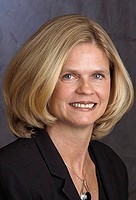
Over the past five decades, mathematics education in the United States has seen little substantive improvement despite repeated calls for reform. Instruction continues to emphasize procedural skills and rote learning, an approach rooted more in tradition than in research. Most widely used curricula are developed by well-meaning teachers or mathematicians who rely on “show-and-tell” methods rather than qualitative studies on how students actually learn mathematics. In this context, Dr. Marilyn Carlson’s work stands as a powerful and research-grounded counterpoint.
Carlson, a Professor of Mathematics Education at Arizona State University, has spent decades developing and refining the Pathways Precalculus Curriculum and Professional Development (PPCPD). Her approach represents a seismic shift from traditional curriculum development, guided not by intuition or convention but by a rigorous, evolving cycle of research, development, and adaptation. The result is a curriculum that doesn’t just improve student test scores, it transforms the way students and instructors understand mathematics.
Despite ongoing reform efforts dating back to the 1980s, the majority of U.S. mathematics curricula still fail to support meaningful student learning. The 1980 Agenda for Action by the National Council of Teachers of Mathematics called for deeper student engagement with mathematical reasoning. Yet, cultural norms in education continued to valorize procedural knowledge over conceptual understanding.
Mathematics curriculum commonly written without consulting research on learning or teaching a course’s ideas, and are thus not based in scientific research. As noted in Carlson’s 2024 case study publication, “many curriculum projects claim to be based in research, but the term is often misapplied to marketing studies rather than empirical investigations.” Consequently, students emerge from these programs unprepared for the rigors of calculus or the demands of real-world problem-solving.
Carlson’s Pathways project is a stark contrast. The PPCPD curriculum was developed using a constructivist framework that places the student’s construction of knowledge at the center of instruction. Elements of the curriculum textbook, classroom investigations, digital resources, and instructional resources have been shaped by qualitative studies on how students learn and reason about key precalculus concepts such as function, rate of change, and exponential growth.
The curriculum incorporates “cognitively scaffolded investigations” designed to engage students in making sense of mathematical relationships rather than memorizing formulas. For example, instead of introducing exponential functions through algebraic notation, Pathways encourages students to explore real-world scenarios like population growth, asking them to reason about growth patterns and relationships between varying quantities. Students then naturally arrive at the algebraic representation as a result of their own inquiry.
One of the distinguishing features of Pathways is that it is educative not just for students but also for instructors. Teachers are often products of the same procedural instruction that the Pathways curriculum seeks to overcome. To support this transition, Carlson and her team designed professional development workshops and instructor materials to help teachers refine their learning goals and understanding of how students learn.
Workshops engage instructors with problems that both challenge and advance their current understandings of precalculus concepts. Teachers are guided to see not only what the learning goals are but also why those goals matter and how students can achieve them. Weekly follow-up sessions and sustained mentoring are built into the implementation model to support ongoing reflection and advances in their ability to foster student thinking and learning.
Pathways is not only grounded in theory, but it is continually adapted to ensure maximum learning gains for all students. The program has been adopted and scaled at over 20 colleges and universities. At these institutions, students using Pathways consistently outperform their peers on the Precalculus Concept Assessment (PCA), a validated tool for measuring conceptual understanding. Passing rates have increased dramatically, by 11 to 42 percent, compared to traditional precalculus courses at the same institutions.
Unlike past reform efforts that fizzled due to a lack of sustained support, Carlson’s project places equal emphasis on how the curriculum is scaled. A detailed framework was developed based on the team’s longitudinal study to identify what allows (or impedes) lasting change. Key success factors include strong local leadership, coherent and accessible instructional resources, continuous professional development, and departmental commitment to research-based learning goals.
Carlson’s work with the Pathways project demonstrates what’s possible when curriculum development is grounded in empirical research and designed as a tool for both student and teacher learning. It challenges long-held norms about what mathematics teaching should look like and offers a proven alternative that helps students use their reasoning and truly understand the targeted concepts.
As the U.S. continues to grapple with how to improve STEM education, Carlson’s model offers not just hope but a roadmap. Her approach shows that deep, lasting improvement in mathematics teaching and learning requires more than new textbooks or digital tools, it requires a fundamental rethinking of the goals, methods, and supports embedded within the curriculum itself.
In a field where real change is rare and slow, Marilyn Carlson and her colleagues’ research-based curriculum and professional development innovation stand as a beacon of what rigorous, student-centered mathematics education can achieve.