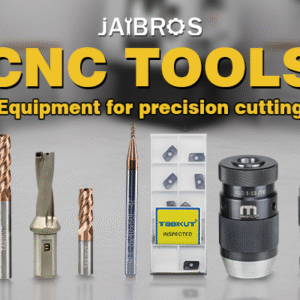
The Impact of CNC Tools on Precision Machining
Modern manufacturing demands high accuracy, repeatability, and efficiency. Even a small machining error can lead to material wastage, production delays, and financial loss. This is where a CNC tools plays a critical role in minimising human dependency and ensuring precision-driven output. CNC machining has transformed traditional manufacturing by automating processes that were once prone to manual mistakes.
Machining errors usually occur due to improper alignment, inconsistent cutting depth, tool wear, or operator fatigue. By integrating advanced CNC machine tools and automated control systems, manufacturers can significantly reduce these errors while improving productivity. As industries continue to adopt CNC technology, error reduction has become one of its strongest advantages.
Understanding Machining Errors in Conventional Processes
Before CNC technology became widespread, machining operations relied heavily on skilled operators. While experience mattered, manual machining still faced challenges such as inconsistent measurements, uneven surface finishes, and difficulty maintaining tight tolerances over long production runs. Variations in speed, feed rate, and cutting pressure often resulted in defective components.
Fatigue a nd repetitive tasks also increased the chances of errors. Even a small miscalculation could affect hundreds of components in batch production. This limitation pushed manufacturers to seek solutions that could deliver consistent accuracy, regardless of production volume or complexity.
How CNC Technology Improves Machining Accuracy
A CNC tool operates based on programmed instructions that control every movement of the cutting process. Unlike manual operations, CNC systems follow precise coordinates, ensuring each cut is executed exactly as intended. This eliminates guesswork and reduces dependency on operator skill alone.
CNC machine tools maintain consistent spindle speed, feed rate, and depth of cut throughout the operation. This consistency is essential for producing identical parts with minimal variation. Advanced controllers also compensate for minor deviations, ensuring stable machining even during long production cycles.
Role of CNC Programming in Error Reduction
Accurate programming is the backbone of CNC machining. Once a program is verified, it can be reused multiple times without deviation. A well-calibrated CNC tool executes the same command repeatedly, ensuring uniformity across all produced parts.
Simulation software further enhances accuracy by allowing manufacturers to test machining paths before actual production begins. Potential collisions, incorrect tool paths , or dimensional issues can be identified early, saving both time and material.
Precision Control in CNC Milling Operations
CNC milling is widely used for complex shapes and tight tolerances. By using advanced CNC tools, manufacturers can achieve precise surface finishes and accurate dimensions even on complex components. Automated axis control allows smooth and controlled movement, reducing vibration and chatter during cutting.
With CNC milling, the chances of overcutting or misalignment are dramatically reduced. This level of control ensures better product quality and reduces the need for rework or secondary finishing processes.
Consistency Across High-Volume Production
One of the biggest advantages of using a CNC tool is consistency. In high-volume manufacturing, maintaining identical quality across thousands of components is challenging with manual processes. CNC systems, however, replicate the same machining cycle with extreme accuracy every time.
This consistency is especially important in industries such as automotive, aerospace, and heavy engineering, where even minor deviations can affect performance and safety. By reducing variability, CNC machining helps manufacturers maintain strict quality standards.
Reduced Dependency on Operator Skill
While skilled operators are still important, CNC machining reduces the impact of human error. Once the machine is set up correctly, the tool handles the cutting process independently. This reduces mistakes caused by fatigue, distraction, or inconsistent manual control.
Operators can focus more on monitoring, inspection, and optimization rather than repetitive cutting tasks. This shift not only improves accuracy but also enhances workplace safety and efficiency.
Tool Wear Monitoring and Compensation
Tool wear is a common cause of machining errors. Modern CNC machine tools are equipped with monitoring systems that detect tool wear and automatically adjust cutting parameters. A tool with wear compensation ensures that dimensional accuracy is maintained even as the cutting edge gradually wears down.
This capability prevents sudden tool failure and reduces the risk of producing defective parts. It also helps extend tool life and lowers overall production costs.
Impact of CNC Machines on Production Costs
Although CNC machine price can be higher compared to conventional equipment, the long-term benefits outweigh the initial investment. Reduced errors mean less scrap, lower work costs, and improved material utilisation. Automated machining also shortens production cycles, leading to faster delivery times.
By minimizing downtime and improving efficiency, CNC machining delivers better return on investment for manufacturers across various industries.
Integration with Quality Control Systems
Modern CNC setups are often integrated with inspection and measurement systems. Real-time feedback ensures that deviations are detected immediately. A CNC operating within such a system can make micro-adjustments during machining, maintaining tight tolerances throughout the process.
This integration significantly reduces post-production inspection efforts and ensures that quality is built into the manufacturing process itself.
Future of Error-Free Machining with CNC Technology
As CNC technology continues to evolve, the use of AI, sensors, and automation will further enhance accuracy. Smart CNC will be able to predict errors before they occur, allowing manufacturers to take corrective action proactively.
The growing demand for precision components across industries makes CNC machining an essential part of modern manufacturing strategies.
Conclusion
In today’s competitive manufacturing landscape, reducing machining errors is not optional—it is essential. A CNC enables manufacturers to achieve higher accuracy, consistent quality, and improved efficiency across all manufacturing operations. By minimising human error, optimising cutting parameters, and maintaining tight tolerances, CNC machining sets new standards for precision manufacturing.
At Jaibros, we understand the importance of reliable CNC solutions for industrial applications. Our focus is on providing high-quality CNC tools and machining solutions that help manufacturers improve productivity, reduce errors, and achieve consistent results in demanding production environments.
FAQs
- How do CNC tools reduce human error in machining?
CNC tools operate based on programmed instructions, reducing dependency on manual control and eliminating inconsistencies caused by operatoror fatigue or misjudgment.
- Are CNC machines suitable for high-precision industries?
Yes, CNC machine tools are widely used in aerospace, automotive, and medical industries due to their ability to maintain tight tolerances and consistent accuracy.
- Does CNC milling improve surface finish quality?
CNC milling provides controlled cutting movements, resulting in smoother surface finishes and reduced need for secondary finishing.
4. Is the CNC machine price justified for small manufacturers?
Although the CNC machine price may seem high initially, reduced errors, lower scrap rates, and higher productivity make it cost-effective in the long run.
- How does tool monitoring help reduce machining errors?
Tool monitoring systems detect wear early and adjust machining parameters automatically, preventing dimensional inaccuracies and tool failure.