The Strange Way Golden Teachers Took Over the Conversation
Golden Teacher mushrooms… funny how they’ve become the “beginner’s legend” and the “old grower’s comfort strain” at the same time. Everyone’s got a story about their first Golden Teacher grow, even if half of them pretend they don’t remember it. There’s something steady about them. Something that doesn’t shout for attention. You look at other strains and they get loud—fast colonizers, heavy pinsets, odd mutations—but Golden Teachers? They just show up. They do the work. And they don’t make a fuss doing it.
Psilocybe mushroom spores have been around forever, obviously. But the rise of actual curiosity—real scientific curiosity—kind of shifted everything. Suddenly, folks aren’t just buying spores for the novelty. They’re studying genetics, stability, lineage drift, phenotype consistency. It’s become this quiet, nerdy revolution. And Golden Teachers sit right there, right in the middle of it, almost smug.
Why Growers Keep Returning to Golden Teachers
Ask ten growers why they stick with Golden Teacher mushrooms and you’ll probably get ten different answers. Some say it’s the reliability—lazy colonization that still finishes strong. Some say it’s the aesthetics, that classic caramel cap with the “teacher’s hat” vibe. Others just shrug and say, “They work, man.” And that’s the whole point. They do.
Even when other strains outpace them on paper, Golden Teachers hold their ground. They don’t contaminate easily. They handle fluctuations in temperature and humidity without throwing a tantrum. They’re basically the Toyota Hilux of the mushroom world. Not flashy, but absolutely bulletproof. And yeah, that matters more than people admit.
The Genetics Behind the Calm
When people talk about psilocybe mushroom spores, they’re usually chasing something. Higher yields. Rare traits. Fancy caps. Fast mycelium. But the real gem is stability. Stability is the kingmaker. Without stable genetics, everything else is noise.
Golden Teacher spores tend to produce consistent phenotypes, which is rare in this space. You can run the same spores twice and the results actually look related, like cousins instead of random strangers. That isn’t luck. That’s genetic structure that’s been worked, reworked, and carried through thousands of home labs, closets, garages, and half-finished basement setups.
The strain’s been around long enough that it’s practically self-selected for durability. That’s the quiet magic no one mentions.
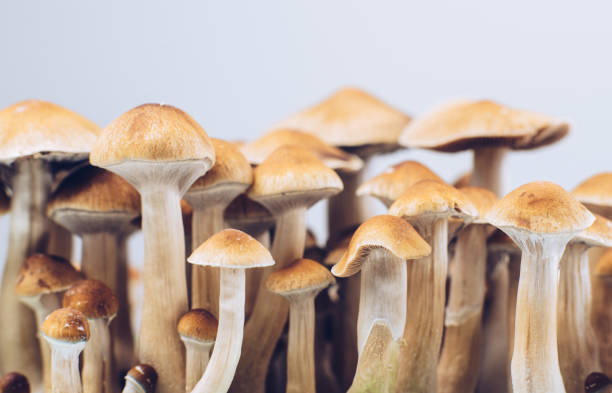
The Learning Curve: Not Too Steep, Not Too Flat
You can grow Golden Teachers using pretty much any tek on the planet—BRF cakes, bulk substrate, tubs, bottles, whatever. They don’t punish beginners as hard as other strains do. You can make a small mistake… or two… and they’ll still fruit. Not beautifully, maybe, but they’ll show up anyway.
And for intermediate growers? GTs become this playground. A chance to dial in moisture ratios, experiment with substrate blends, watch mycelium behavior. Beginners get a forgiving experience. Expert growers get nuanced feedback. Not bad for a strain that people sometimes call “basic.” It’s not basic. It’s balanced.
Psilocybe Mushroom Spores: More Than a Starting Point
Spores get treated like the “boring” part of mushroom cultivation. Everybody wants to jump straight to the grow. But psilocybe mushroom spores hold the entire blueprint. Messy spores, unstable spores, contaminated spores—they’ll derail you before you even notice you’re off track.
Good spores make everything smoother. You’re not fighting hidden contamination. You’re not dealing with mycelium running like it’s confused. You’re not watching jars stall halfway like they lost the motivation to finish. Reliable spores are the backbone of every successful grow, even if people don’t talk about it enough.
And yes, it sounds obvious. But it’s the obvious stuff that trips people up the most.
Why Golden Teacher Mushrooms Make the Perfect Test Strain
If you’re experimenting—new substrate, a new sterilization routine, a new incubation chamber you cobbled together from leftover parts—Golden Teachers are perfect for the test run. They don’t freak out when conditions aren’t ideal. They tell you what’s working and what isn’t without punishing you with a complete failure.
They’re the ideal “control variable.” You want to test a new pasteurization method? Use GTs. Want to see if a different grain works better? Use GTs. Want to figure out whether your new monotub build actually circulates air correctly? GTs again.
Other strains will lie to you. Golden Teachers give honest feedback.
The Culture Around Golden Teachers
There’s a whole vibe surrounding Golden Teacher mushrooms. Something between nostalgia and respect. Older growers talk about them like a favorite old jacket. Something that’s been through a lot and still holds up. New growers treat them like a rite of passage—you haven’t really started until you’ve run GTs at least once.
There’s no hype culture around them, which is refreshing. No “limited drop,” no “ultra-exotic cross,” none of that flashy nonsense. Just a strain that continues to show up decade after decade and refuses to fade out. That’s kind of badass, honestly.
Psilocybe Spores and the Shift Toward Real Genetics Work
People used to treat psilocybe mushroom spores almost like collectibles. Interesting colors. Nice prints. That kind of thing. Now, there’s a legit interest in preserving lineages, cleaning up traits, stabilizing mutations, and actually understanding the inheritance patterns.
Growers aren’t just growing mushrooms anymore—they’re breeding them, studying them, comparing growth patterns across substrates. It’s become a real craft. And well-collected spores from a reputable source are the foundation of that craft.
This shift is why companies with strong genetic libraries matter now more than ever.
The Pitfalls Beginners Don’t See Coming
New growers think contamination is their biggest enemy. It’s not. The real enemy is impatience. People open jars too early, mess with tubs too soon, adjust monotub lids five times a day like the mushrooms are going to file a complaint.
Golden Teachers survive a lot of this silliness, but not all of it. Psilocybe mushroom spores can handle a lot, but they can’t overpower bad habits forever.
The trick is simple: do the tek as written. Then stop touching everything. Mushrooms grow when you get out of their way. Ask any grower with a few years under their belt, they’ll say the same thing.
Why Golden Teachers Aren’t Going Anywhere
Some strains flash into popularity, melt the forums for a few months, then vanish. Not Golden Teachers. They’ve been relevant for decades. And they’ll probably be relevant decades from now. Stability doesn’t go out of style. Consistency doesn’t fade.
The name “Golden Teacher” became iconic because it represented exactly what the strain delivers: it teaches you. Patience. Technique. Observation. A slow, steady rhythm. Not every strain gives you that.
It’s easy to chase hype. Harder to appreciate the classics.
Spores, Storage, and the Lifespan of a Good Print
Psilocybe mushroom spores have their own quirks. They’re durable, but not immortal. Heat kills them. Freezing can mess with viability. Bad vendors ship dirty prints that look fine at first but stall your jars when the contamination finally wakes up.
Good spores, carefully collected and stored, can last for years. That’s why the source matters. A clean print from a solid supplier is worth more than ten cheap ones from who-knows-where. Especially if you’re planning to study genetics or refine a particular trait.
If you store your spores correctly—cool, dark, dry—they’ll outlive most of your cultivation equipment.
What Comes Next for Growers
The future feels different now. More open. More people are diving into cultivation not just for fun but because they genuinely want to understand the biology. Genetics used to be a niche thing; now hobbyists are swapping data like small-scale scientists.
Golden Teacher mushrooms will keep playing the role they’ve always played: the gateway, the benchmark, the reliable strain you come back to when other strains start acting weird. And psilocybe mushroom spores will keep driving the entire hobby forward, one careful print or syringe at a time.
If you’re stepping into the world of cultivation—or stepping back into it—this is the moment. Get the good genetics. Start the journey right. Don’t cut corners.
Ready to Get Started?
If you want clean, reliable, well-kept psilocybe mushroom spores and strong Golden Teacher genetics, don’t overthink it. Just go to a trusted source with a real library—one that actually cares about lineage and consistency.
Visit Full Canopy Genetics to start.
FAQs About Golden Teacher Mushrooms & Psilocybe Spores
1. Are Golden Teacher mushrooms good for beginners?
Yes, totally. They’re forgiving, slow but steady, and they don’t collapse at the first sign of chaos. Perfect starter strain.
2. How long do psilocybe mushroom spores stay viable?
When stored correctly—dark, cool, sealed—they can last several years. Heat and moisture ruin them fast.
3. Why are Golden Teachers considered “stable”?
Because they produce consistent phenotypes across generations. Their genetic line has basically refined itself through widespread cultivation.
4. Can I use any substrate for Golden Teachers?
Pretty much. They run well on BRF, grain, bulk, manure, coir—whatever you throw at them, within reason.
5. Where should I buy reliable spores?
A vendor with clean lab practices, good reputation, and consistent genetics. Full Canopy Genetics fits that criteria and then some.