“James Dietz and the Art of Remembering: A Painter’s Journey Through Modern Military History”
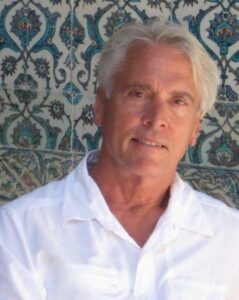
James Dietz has spent his life recording scenes that many people only know through books, newsreels or second-hand stories. His paintings are built on research, observation and an understanding of how individual moments shape the larger memory of conflict. Born in 1946 and raised in San Francisco, he developed an early interest in drawing and later pursued formal training at the Art Center College of Design. He graduated in 1969 and stepped directly into the world of commercial illustration, a field that gave him the discipline and versatility he would later apply to his historical and aviation work.
After leaving school, he moved to Los Angeles to work professionally and became involved in a wide range of projects. His early assignments included automobile ads, movie posters, and covers for romance and action novels. He learned how to meet deadlines and how to communicate a complete story through a single image. Those years in commercial studios helped him refine a sense of composition that would later define his reputation. He continued this work in New York, but by 1978, he and his family decided to relocate to Seattle. The move marked a turning point. In this new environment, he began to focus more seriously on aviation and military history, subjects that allowed him to combine artistic skill with his curiosity about the people involved in conflict.
As his work developed, Dietz became known for paintings that did not treat war as an abstraction. He paid close attention to the small details that bring scenes to life. He often said that the relatively small size and fragile design of early aircraft offered opportunities to highlight the human figures who operated them. This perspective shaped his early World War One paintings and helped him gain a reputation as an aviation painter who did not simply paint airplanes. He wanted to paint the individuals who faced extreme conditions and made decisions moment by moment. Dietz studied uniforms, equipment, ration boxes and machinery. He included the correct fittings on Austrian engines and documented items from the Russian front. His goal was to show the viewer something true to the period and true to the people who lived it.
His work soon expanded into a large collection of major pieces. Raven 42, which portrays a 2005 skirmish in southern Baghdad between Iraqi insurgents and soldiers of the United States Army National Guard, stands out as one of his most recognized modern scenes. Other important works include Maximum Effort, created for the 449th Bomb Group Association, as well as Arctic Convoy, Fall of the Falcon, Last Word and Yanks Mount Up. Bottom of the First, an oil painting that shows United States soldiers stationed in the Philippines during the Second World War, earned Best in Show at the Horizons of Flight Art Exhibition in 2000, hosted by CAE Simuflight. Each of these works reflects a commitment to accuracy and a respect for those who served.
Dietz’s paintings appear in several museum collections. Citizen Soldier and The Crossing, which captures the 132nd Infantry Regiment at Guadalcanal, are displayed at the Pritzker Military Museum and Library. His World War One pieces were the focus of an exhibition titled Wood and Canvas, which ran at the Wings Over the Rockies Air and Space Museum until January 2014. Collectors and institutions respond to his art because it serves as both documentation and interpretation. He brings past events into view without turning them into spectacle. Instead, he focuses on small gestures and expressions that suggest the weight of the situation.
His influences include Frederic Remington, Harvey Dunn, Howard Brodie, Kerr Eby and Thomas Lea. Each of these artists approached combat from a human point of view, and their influence can be felt in Dietz’s scenes. His paintings of the Second World War often carry the tone of earlier images from the American Civil War. They present conflict without romanticizing it and show the classical structure of a battle while acknowledging its brutality. Dietz once noted that he had made bold claims about his ability to handle World War One aviation and that he had to follow through. That challenge encouraged him to stay deeply involved in every aspect of his research. His focus on the people behind the machines helps explain why his work continues to be used in military institutions and historical organizations.
Over the years, he has worked with many clients. These include Boeing, Bell Helicopter, Federal Express, Allison Cessna, Flying Tigers, the Indianapolis 500, BMW, the United States Air Force Documentary Art Program, Wingnut Studios, Meadowbrook, Pebble Beach Concours d’Elegance and the National Guard. He has also worked with numerous United States Army divisions and associations including the 82nd Airborne Division, the 101st Airborne Division, the Army Rangers, Special Forces, the First, Second, Third and Fourth Divisions, the First Cavalry Division, the Eleventh Armored Cavalry Regiment, the One Hundred Seventy Third Airborne Brigade, the Command General Staff College and the United States Army War College.
His work has received recognition from many arts organizations. He earned Best in Show at the EAA Aviation Art Show from 1989 through 1991 and was named Master Artist at the same institution in 1992. He earned Best in Show and three Best of Era awards at the San Antonio Military Art Show in 1992 and received an Honorable Mention at the American Society of Aviation Artists Show in 1994. He was awarded Best in Show at the Flying Magazine Simuflite Art Show in several different years, including 1993, 1994, 1999, 2000 and 2001. Additionally, there have been two books published on Dietz’s work: Portraits of Combat: The WWII Art of Jim Dietz and Knights in Canvas: The Aviation Art of James Dietz.
His other honors include the R.G. Smith Award for Excellence in Naval Aviation Art, the Stanley Wanlass Award and awards of excellence at the Pebble Beach Concours d’Elegance. His achievements also include multiple Silver Cups from the League of World War One Aviation Historians.
James Dietz has dedicated his career to preserving moments that might otherwise fade. His paintings give viewers a chance to see the past through the eyes of those who lived it. His work continues to shape how military history is understood, remembered and passed on to future generations.