 Industrial heating plays a crucial role in manufacturing, logistics, and commercial production facilities. It directly affects productivity, energy consumption, operational costs, and environmental impact. As energy prices rise and sustainability becomes a priority, industries are increasingly turning toward modern, efficient, and flexible heating solutions to meet both economic and regulatory demands.
1) The challenges of industrial heating
Industrial buildings present specific heating challenges:
-
large surface areas and high ceilings,
-
variable occupancy and production schedules,
-
heat losses through walls, roofs, and loading docks,
-
the need for precise temperature control in some processes,
-
rising energy costs and stricter environmental regulations.
Modern heating systems must therefore combine high performance, reliability, and energy efficiency.
2) Key criteria for choosing an industrial heating system
Before selecting a heating solution, several factors must be considered:
-
building size and insulation level,
-
type of industrial activity,
-
required indoor temperature,
-
operating hours,
-
available energy sources,
-
long-term operating costs.
A tailored solution is essential, as no single system fits all industrial environments.
3) High-efficiency boiler systems
Condensing gas boilers
Condensing boilers recover heat from exhaust gases, achieving high efficiency levels. They are suitable for industries requiring stable and continuous heating. While still relying on fossil fuels, they offer lower consumption compared to traditional boilers.
Biomass boilers
Biomass systems use renewable fuels such as wood pellets or chips. They are well suited for industries with high heat demand and available storage space, offering reduced carbon emissions and long-term fuel cost stability.
4) Heat pumps for industrial applications
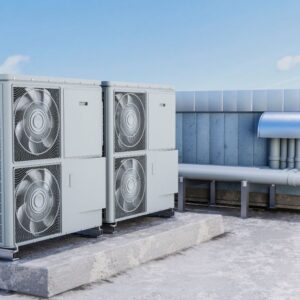
Industrial heat pumps are increasingly popular due to their excellent energy performance. They extract heat from air, ground, water, or industrial processes and upgrade it to usable temperatures.
Key advantages:
-
high efficiency and low operating costs,
-
reduced CO₂ emissions,
-
compatibility with renewable electricity,
-
ability to provide both heating and cooling.
Heat pumps are particularly effective in well-insulated buildings or when waste heat recovery is possible.
5) Radiant heating systems
Radiant heating solutions are ideal for large industrial spaces.
Common technologies:
-
gas-fired radiant tubes,
-
infrared panels,
-
hydronic radiant systems.
They heat people and objects directly rather than the air, reducing heat losses in high-ceiling buildings and improving comfort while lowering energy consumption.
6) Air heating and destratification systems
Warm air systems are often used in warehouses and production halls.
Modern improvements include:
-
high-efficiency air heaters,
-
destratification fans to redistribute warm air,
-
zoning control to heat only occupied areas.
These solutions help eliminate temperature stratification and reduce wasted energy.
7) Waste heat recovery and energy reuse
One of the most efficient industrial heating strategies is recovering waste heat from:
-
production processes,
-
compressors,
-
refrigeration systems,
-
exhaust air.
Recovered heat can be reused for space heating, water heating, or industrial processes, significantly improving overall energy efficiency.
8) Hybrid and integrated heating systems
Combining multiple technologies increases flexibility and performance.
Examples include:
-
heat pumps combined with boilers,
-
biomass systems supported by gas boilers,
-
solar thermal integrated with industrial heating.
Hybrid systems adapt to changing energy prices and production demands while ensuring continuous operation.
9) Smart control and energy management
Digital solutions are transforming industrial heating.
Key features:
-
real-time monitoring,
-
automated scheduling,
-
zone-based temperature control,
-
predictive maintenance,
-
energy consumption analysis.
Smart control systems optimize performance, reduce energy waste, and improve system reliability.
10) Environmental and regulatory considerations
Industries must increasingly comply with environmental regulations and emission reduction targets. Modern heating systems help:
-
lower carbon footprints,
-
meet regulatory requirements,
-
enhance corporate sustainability goals,
-
future-proof industrial facilities.
Investing in efficient heating solutions also strengthens a company’s environmental reputation.
Modern industrial heating solutions combine efficiency, flexibility, and sustainability. Technologies such as high-efficiency boilers, heat pumps, radiant systems, and waste heat recovery allow industries to significantly reduce energy consumption while maintaining optimal comfort and operational performance.
Choosing the right system requires a comprehensive analysis of the building, processes, and long-term objectives. When properly designed and managed, modern industrial heating becomes a strategic asset rather than a cost burden.
Industrial heating: modern and efficient solutions
As winter approaches, ensuring that your heating system is ready to operate efficiently is essential for maintaining comfort, controlling energy costs, and avoiding unexpected breakdowns. Proper preparation not only improves performance but also extends the lifespan of your equipment and enhances safety. Whether you use a boiler, heat pump, furnace, or hybrid system, a proactive approach makes all the difference.
1) Schedule a professional inspection
Before the cold season begins, it is important to have your heating system inspected by a qualified professional.
A professional check typically includes:
-
inspection of key components,
-
verification of system safety,
-
testing of performance and efficiency,
-
detection of early signs of wear or malfunction.
Preventive maintenance reduces the risk of breakdowns during peak winter demand.
2) Clean and service the system components
Dust, debris, and residue can significantly reduce heating efficiency.
Key actions include:
-
cleaning or replacing air filters,
-
cleaning heat exchangers and burners,
-
checking fans and pumps,
-
removing obstructions around external units.
Clean components allow the system to operate smoothly and consume less energy.
3) Check thermostats and controls
Proper temperature regulation is essential for comfort and energy savings.
Recommendations:
-
test thermostats for accuracy,
-
replace batteries if needed,
-
program schedules according to occupancy,
-
consider upgrading to a smart thermostat.
Efficient control prevents overheating and unnecessary energy use.
4) Inspect pipes, ducts, and connections
Leaks and poor insulation can lead to heat loss and reduced system efficiency.
Important checks:
-
inspect pipes for leaks or corrosion,
-
ensure ducts are sealed and insulated,
-
verify valves and fittings are in good condition.
Proper insulation helps maintain consistent indoor temperatures.
5) Bleed radiators and balance the system
For hydronic heating systems, trapped air can reduce performance.
Steps to take:
-
bleed radiators to remove air pockets,
-
ensure even heat distribution,
-
balance the system for consistent comfort in all rooms.
Balanced systems work more efficiently and heat spaces evenly.
6) Test the system before cold weather arrives
Running the heating system early helps identify potential issues.
What to look for:
-
unusual noises,
-
slow heat-up times,
-
inconsistent temperatures,
-
error messages or warning lights.
Early testing allows time for repairs before winter sets in.
7) Prepare outdoor units and ventilation areas
For systems with outdoor components, weather protection is essential.
Preparation tips:
-
clear debris, leaves, and snow-prone obstacles,
-
ensure proper airflow around units,
-
check drainage to prevent water buildup,
-
protect equipment without restricting ventilation.
Outdoor units must remain accessible and well-ventilated.
8) Improve building insulation and airtightness
Heating system efficiency depends heavily on the building envelope.
Improvements may include:
-
sealing gaps and drafts,
-
adding insulation in roofs and walls,
-
upgrading windows and doors,
-
installing door sweeps and weatherstripping.
Better insulation reduces heating demand and energy consumption.
9) Monitor energy consumption and system performance
Tracking energy use helps identify inefficiencies.
Best practices:
-
compare current consumption to previous winters,
-
monitor system runtime,
-
adjust settings if consumption increases unexpectedly.
Continuous monitoring helps maintain optimal performance throughout the season.
10) Plan for emergency support and spare parts
Even with proper preparation, unexpected issues can occur.
Preparation strategies:
-
keep contact details of a service provider,
-
understand basic system shutdown procedures,
-
ensure access to spare parts if applicable.
Being prepared minimizes downtime and discomfort.
Conclusion
Preparing your heating system for winter is an essential step toward ensuring comfort, reliability, and energy efficiency during the cold months. Regular maintenance, proper system checks, and improved insulation all contribute to smoother operation and lower heating costs.
By taking proactive measures before winter arrives, you can enjoy a warm, safe, and stress-free season while extending the life of your heating system.
Nom de l’Entreprise : Technicool Srl
Adresse :
- Adresse Rue Jakob Smits 17
- Ville : Bruxelles
- Code Postal : 1070
- Pays : Belgique
Téléphone : +32 475 81 56 51
Adresse Email : info@technicool.be
Site Web : technicool.be