Subtle changes in breath sounds can reveal an impending respiratory crisis. A faint murmur might hint at cardiac compromise. An irregular rhythm could signal immediate danger. These are the quiet clues that EMS providers rely on to guide urgent decisions long before reaching the ER.
That’s why a stethoscope needs to deliver clear sound over ambulance noise, endure frequent folding and cleaning, and remain comfortable even after a 12-hour shift. MedTechKits provides EMS students and field professionals with authentic 3M Littmann stethoscopes, carefully selected for their proven reliability and durability in demanding EMS environments.
The curated selection highlights two trusted options: the ultra-light Littmann lightweight II, designed for all-day comfort and straightforward use during training and routine calls, and the highly versatile Littmann classic III, delivering outstanding acoustic clarity for adult and pediatric assessments.
These stethoscopes give learners and experienced providers alike the consistent performance needed to sharpen skills, build confidence, and deliver precise care on every scene.
Why Quality Auscultation Matters in EMS care
The act of listening to internal body sounds is one of the most fundamental yet powerful diagnostic skills in emergency and clinical care. Using a stethoscope, providers can detect subtle abnormalities in heart, lungs and vascular sounds that may not be visible through inspection or palpation alone. These acoustic clues often provide the first indication of critical conditions such as heart failure or bronchial obstruction.
For those wondering what supplies do i need for emt school, a high-quality stethoscope is essential. Quality auscultation can significantly influence time-sensitive decisions. For example, distinguishing between clear lung sounds and faint crackles or wheezes helps guide ventilation and transport priorities. Similarly, identifying irregular heart rhythms or muffled heart sounds can alert providers to potential cardiac tamponade or other life-threatening issues.
Poor acoustic quality can mask these vital signs. Background noise from crowds or equipment, combined with inadequate sound transmission, may lead to missed findings and delayed intervention. This is why the clarity and reliability of the stethoscope itself play a direct role in patient outcomes.
Clear, precise sound can make all the difference in patient care. Tools built for high-fidelity performance, like the Littmann stethoscopes offered by MedTechKits, give providers the confidence to detect subtle changes and make accurate assessments, no matter the environment.
Key Features That Set Littmann Stethoscopes Apart
Littmann stethoscopes are renowned for combining precise acoustics and ergonomic design, making them essential tools for EMS students and field instructors. MedTechKits offers two models that stand out for their distinct advantages, each tailored to specific needs in training and clinical enviornments.
The Littmann lightweight II stethoscope is designed for comfort and ease of use. Its lightweight construction reduces strain during long shifts, making it ideal for EMS students and professionals on the move.
The dual-sided chestpiece provides dependable acoustic performance, while its simple and no-frills design ensures straightforward operation. This model is particularly suited for foundational training and extended wear without fatigue.
The Littmann classic III stethoscope, in contrast, is built for advanced acoustic performance. Its tunable diaphragm on both adult and pediatric sides allows providers to detect high and low-frequency sounds with exceptional clarity.
The classic III’s durable tubing and ergonomic design make it ideal for intensive field use, where precise auscultation is critical for accurate diagnosis. This model excels in complex scenarios, supporting detailed assessments of subtle heart murmurs and other critical indicators.
The Littmann Lightweight II S.E. Stethoscope
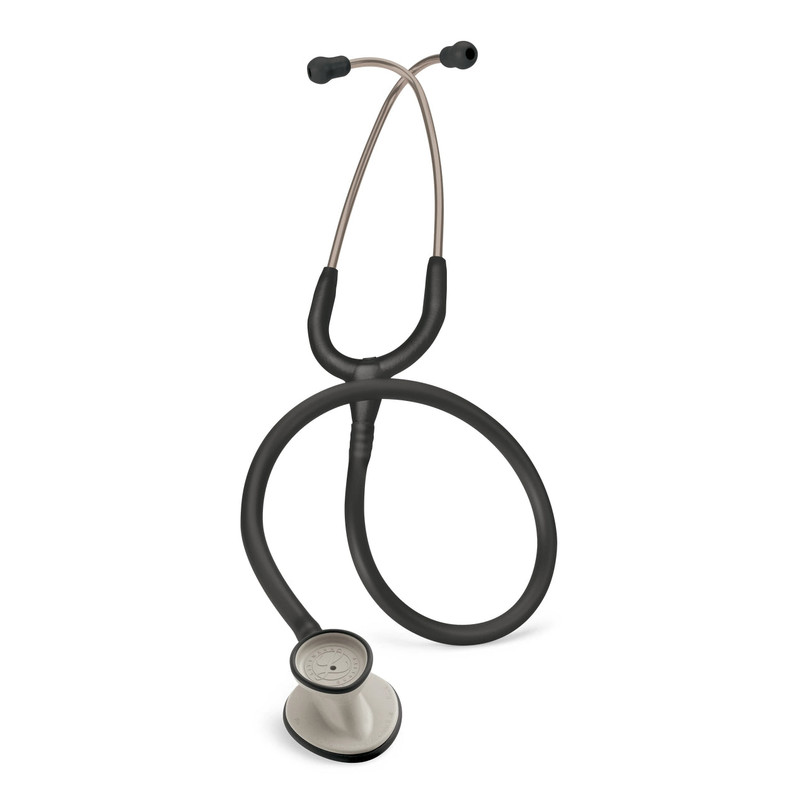
The littmann lightweight ii se stands out as the lightest adult stethoscope in the Littmann lineup available through MedTechKits, weighing just 118 grams. This ultra-light design significantly reduces neck and shoulder strain during extended shifts.
Combined with its 28-inch length and anatomically angled headset, it allows for effortless positioning and all-day wear without fatigue, helping providers maintain focus on patient care rather than discomfort.
A key innovation in this model is its unique teardrop-shaped chestpiece, which facilitates easy auscultation around blood pressure cuffs and body contours. This practical design is especially valuable in critical emergency care for quick blood pressure readings and basic physical assessments.
The dual-sided chestpiece incorporates tunable diaphragm technology. Apply light pressure to hear low-frequency sounds, such as heart murmurs. Use firm pressure to capture high-frequency sounds, like lung adventitious noises. This eliminates the need to flip the chestpiece, saving valuable time during evaluations.
Built with next-generation tubing that resists staining, the Lightweight II S.E. ensures long-lasting flexibility and shape retention even when folded tightly in a pocket. It is free from natural rubber latex and phthalate plasticizers, benefiting both sensitive providers and patients while supporting environmental health.
The Littmann Classic III Stethoscope
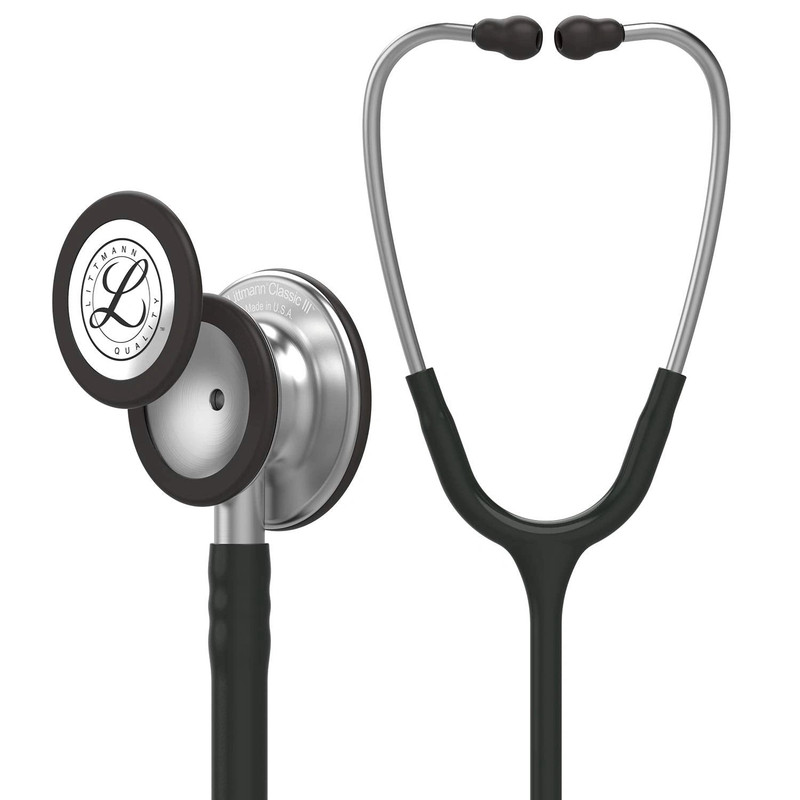
The littmann classic iii stethoscope, offered by MedTechKits, is favored by clinicians for its versatile dual-sided chestpiece that performs reliably across diverse patient needs. The large adult diaphragm delivers rich, detailed acoustics across a wide frequency range, while the smaller pediatric side handles infants and pediatric patients.
For those rare moments when an open bell is preferred, the included non-chill bell sleeve snaps on effortlessly, giving you traditional bell performance on demand. The heart of its superior sound quality lies in 3M’s patented tunable diaphragm technology: a single-piece diaphragm that responds differently based on applied pressure.
Light contact brings out deep, low-frequency tones like diastolic murmurs or third heart sounds, while firm pressure shifts the focus to crisp high-frequency details such as wheezes or fine crackles. This pressure-sensitive design means no flipping the chestpiece mid-assessment, allowing smoother exams even in chaotic EMS environments.
Engineered for the rigors of daily professional use, the classic III features next-generation tubing that stays flexible and resists cracking despite constant exposure to skin oils and alcohol wipes.
Weighing a comfortable 150 grams with anatomically angled eartips and soft-sealing earpieces, it provides an excellent acoustic seal while remaining easy to wear for entire shifts. Completely latex- and phthalate-free, with smooth, easy-to-clean surfaces and a robust 5-year warranty, it’s built to deliver consistent high performance year after year.
Integrating Stethoscope Findings with Other Vital Signs
Effective patient assessment in EMS relies on synthesizing multiple data points rather than viewing any single finding in isolation. Stethoscope auscultation provides critical acoustic information that, when combined with other vital signs, creates a more complete clinical picture.
For instance, diminished lung sounds on one side paired with low SpO2 readings and tracheal deviation may strongly suggest pneumothorax, while bilateral crackles heard alongside elevated blood pressure and tachycardia could point toward acute pulmonary edema. This integration allows providers to prioritize interventions and anticipate deteriorating conditions during transport.
Training environments reinforce this approach through realistic scenarios. Many EMS programs use tools like the lifepak simulator to replicate combined vital sign abnormalities, allowing students to practice correlating auscultated findings with monitor readings and capnography waveforms in real time.
This hands-on integration builds the pattern recognition essential for rapid decision-making in the field, ensuring that acoustic clues from the stethoscope are never evaluated alone but as part of an interconnected assessment process.
MedTechKits: Curated Equipment for EMS Training
MedTechKits operates as a dedicated emt supply store focused on providing high-quality medical tools tailored to the needs of the emergency medical services community. The company prioritizes equipment that supports both educational and operational demands, ensuring that items are functional and suited to the intense environments encountered in EMS care.
MedTechKits selects products with an emphasis on durability and practicality, recognizing the challenges faced during EMS training programs and clinical rotations. The curated inventory addresses common pain points, such as equipment that fails under repeated use or lacks the precision required for accurate assessments.
By offering authentic, field-tested gear at straightforward pricing, MedTechKits assists EMS students in building essential skills without distractions from subpar tools, enables instructors to conduct effective hands-on training, and equips practicing providers with instruments they can depend on during critical calls.
Conclusion: Building Confidence Through Reliable Tools
Throughout the demanding path of EMS training and practice, the ability to perform accurate, timely assessments stands as a defining factor in patient outcomes. From detecting subtle lung changes that signal respiratory distress to identifying cardiac irregularities amid noisy scenes, quality auscultation remains an indispensable skill that no amount of technology can fully replace.
The right stethoscope serves as more than equipment, it acts as an extension of clinical judgment, offering the clarity needed to make informed decisions when options are limited and stakes are high. Whether choosing an entry-level model that prioritizes comfort for long training days or a versatile professional-grade option built for complex diagnostics, the goal remains the same: consistent, dependable performance that supports growth and precision at every career stage.
MedTechKits continues to play a vital role in this process by providing EMS students and field providers with authentic, carefully selected tools designed to meet EMS challenges. By making high-quality Littmann stethoscopes readily available, the company helps ensure that the next generation of responders enters the field fully prepared to listen, interpret, and act with confidence.
Frequently Asked Questions
Q1. What sets the Littmann classic III apart from other stethoscopes?
The Littmann classic III features a versatile dual-sided chestpiece with tunable diaphragms on both the adult and pediatric sides, allowing seamless switching between patient types without losing acoustic quality. Its patented 3M technology captures both high- and low-frequency sounds simply by adjusting pressure, delivering exceptional clarity even in noisy environments. This combination of flexibility and durable construction makes it a top choice for professionals handling diverse and complex assessments.
Q2. Why is the lightweight II S.E. recommended for beginners?
The lightweight II is the lightest adult stethoscope in the Littmann range at just 118 grams, reducing neck strain during long training sessions. Its simple teardrop-shaped chestpiece and tunable diaphragm provide reliable basic acoustics without overwhelming new users with advanced features. This straightforward design helps EMS and nursing students concentrate on mastering fundamental skills rather than managing complicated equipment.
Q3. How do these stethoscopes support effective emergency response?
Both models are built with resilient next-generation tubing and high-quality diaphragms that maintain clear sound transmission. Their ergonomic designs and comfortable fit allow providers to focus fully on patient evaluation rather than adjusting uncomfortable gear. Durable construction ensures consistent performance shift after shift, giving responders the confidence to make rapid, accurate decisions.
Q4. What should I consider when choosing between the classic III and lightweight II S.E.?
Consider the classic III if your role involves varied patient populations or requires detailed detection of subtle sounds, as it offers greater versatility and acoustic sensitivity. Choose the lightweight II if comfort and simplicity are priorities, especially during training or for routine assessments. Ultimately, the best choice depends on your experience level, daily workload, and specific clinical demands.
Q5. Can the Littmann Classic III be used effectively for pediatric patients?
Absolutely. The smaller diaphragm side is specifically designed for pediatric and infant assessments, and the included non-chill sleeve converts it to an open bell when needed for very low-frequency sounds. The tunable technology works equally well on both sides, providing clear high- and low-frequency capture regardless of patient size. This built-in versatility eliminates the need for a separate pediatric stethoscope in most EMS and clinical settings.