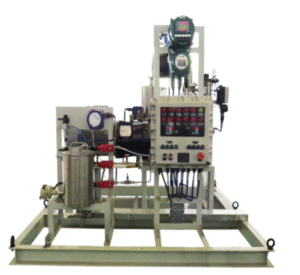
Efficiency, precision, and sustainability define the success of contemporary operations in the rapidly evolving industrial world. The vacuum pump serves as a vital component in numerous systems that ensure smooth functioning across manufacturing, research, and processing sectors. Among these technologies, the dry vacuum pump stands out for enabling industries to operate optimally while preserving environmental integrity.
Overview of Dry Vacuum Pumps
Dry vacuum pumps have become increasingly popular in industries that demand low maintenance, oil-free, and contamination-free operations. They are extensively used in electronics, pharmaceuticals, chemical processing, and semiconductor manufacturing, where high engineering standards and reliable performance are essential.
Understanding Dry Vacuum Pump Manufacturers
A dry vacuum pump manufacturer designs and constructs vacuum systems that do not require lubricating oil or sealing fluids in the compression chamber. These pumps use specially designed chambers and rotors that generate a vacuum through mechanical motion.
By avoiding contamination associated with oil-sealed systems, dry pumps are ideal for sensitive applications where even trace residues could affect product quality. Manufacturers focus on high efficiency, durability, and environmental responsibility to meet the demands of modern industries.
Principles of Operation
Dry vacuum pumps operate through a simple yet effective mechanism. Rotors rotate synchronously within a chamber, trapping and compressing gases to form a vacuum. Since no oil or liquid seal is present, there is no cross-contamination. Cooling systems and tight mechanical tolerances help manage temperature and reduce friction, ensuring reliable performance.
Types of Dry Vacuum Pumps
Different types of dry vacuum pumps are available, each suited to specific industrial applications:
- Scroll Dry Pumps – Compact and ideal for laboratories and light industries.
- Screw Dry Pumps – Suitable for large-scale industrial operations.
- Claw Dry Pumps – Energy-efficient and known for low operational costs.
- Roots Dry Pumps – Commonly used as booster pumps to achieve higher vacuum levels.
Despite their variations, all dry vacuum pumps share oil-free and eco-friendly characteristics.
Key Features and Specifications
Modern dry vacuum pumps offer advanced features that enhance reliability and performance, including:
- Oil-free operation for clean, contamination-free environments
- Minimal maintenance requirements due to fewer moving parts
- Energy-efficient design that reduces power consumption
- Compact size for easy installation and integration
- Extended lifespan through precision engineering and robust materials
These attributes make dry vacuum pumps indispensable in industries where reliability and efficiency are crucial.
Industrial Applications of Dry Vacuum Pumps
Dry vacuum technology supports a wide range of industrial processes, including:
- Semiconductor and electronics fabrication
- Pharmaceutical drying and distillation
- Food and beverage packaging, freeze-drying, and degassing
- Chemical and petrochemical processing
- Automotive coating, testing, and assembly
- Research and laboratory applications
Their versatility and cleanliness make them vital to maintaining high-quality production environments.
Benefits of Partnering with a Reliable Manufacturer
Collaborating with a reputable dry vacuum pump manufacturer ensures consistent performance and support. Key benefits include:
- Strong design and R&D capabilities for reliable and durable pumps
- Application-specific solutions tailored to industry requirements
- Lower operational costs through efficient, low-maintenance designs
- Environmentally responsible manufacturing practices
- Continuous innovation with automation and smart performance monitoring
Sustainability and Environmental Impact
Sustainability has become a central focus in modern industrial practices. Unlike traditional oil-sealed pumps, dry vacuum pumps eliminate oil waste, reducing both costs and environmental burden. Their energy efficiency supports carbon reduction goals, and their clean operation aligns with strict manufacturing standards in sectors such as semiconductors and pharmaceuticals.
Challenges Faced by Manufacturers
Despite their advantages, dry vacuum pump manufacturers encounter several challenges:
- Precision engineering demands high-grade materials and tight tolerances
- Complex designs and materials increase production costs
- Effective heat management is required without oil lubrication
- Noise and vibration control requires advanced assembly techniques
Ongoing investment in research, material science, and testing is essential to overcome these challenges and enhance long-term reliability.
Example: Tekman India’s Technological Leadership
Tekman India has emerged as a leading name in high-performance vacuum systems. By combining innovation with sustainability, the company provides efficient and environmentally friendly vacuum solutions tailored to modern industrial needs.
Future Trends in Dry Vacuum Pump Technology
The future of dry vacuum pump manufacturing is driven by automation, digital monitoring, and sustainability. IoT-based real-time analytics, predictive maintenance, and smart sensors are becoming integral to pump design. Hybrid and modular vacuum systems will offer improved efficiency, while advanced materials such as corrosion-resistant alloys will enhance durability and performance.