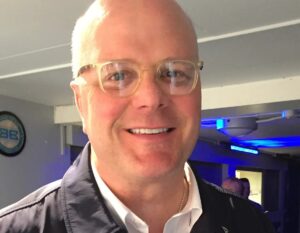
Robert Singer, born on May 14, 1964, in Omaha, Nebraska, is an American neurosurgeon, artist, and guitar designer whose career reflects a rare blend of science, creativity, and innovation. His life has been defined by the precision of brain surgery, the imagination of modern art, and the craftsmanship of building custom guitars. Over the course of several decades, Singer has developed a professional path that is both multidisciplinary and highly individual, demonstrating how medicine, visual expression, and music can coexist in one person’s work.
Singer began his academic journey at the University of Iowa, where he studied history and studio art, earning a Bachelor of General Science degree in 1986. His early interest in anatomy and the workings of the human body led him to graduate studies at Creighton University, followed by a Doctor of Medicine degree from the University of Nebraska Medical Center in 1992. Soon after, he began his neurosurgical training at Vanderbilt University, a period that laid the foundation for a career focused on the treatment of neurovascular diseases and tumors. He later advanced his training with a fellowship in Interventional Neuroradiology at Stanford University and a fellowship in Cerebrovascular Surgery at Massachusetts General Hospital, affiliated with Harvard Medical School.
While his medical work advanced, Singer continued to expand his education beyond medicine. He earned a Master’s degree in Modern Art History, Theory, and Criticism from Azusa Pacific University, an accomplishment that reflected his growing commitment to art alongside his scientific career. In 2016, he also completed the Master of Healthcare Delivery Science program at Dartmouth College, showing a continued interest in the broader systems of healthcare and patient care delivery.
In his medical career, Singer has been recognized for his specialization in neurovascular and neuro-oncological surgery. His clinical practice covers both traditional surgical techniques and newer endovascular approaches, offering patients a range of treatment options tailored to their conditions. Singer’s contributions to medicine have also been recognized by his involvement with the Brain Aneurysm Foundation, where he serves as a member of the medical advisory board. His work has earned him awards and honors, including multiple Top Doctor awards, and recognition in publications such as Nashville Lifestyles and New Hampshire Magazine. He was also honored with the Vanderbilt Neurosurgery Resident Teaching Award in 2012 and has been named among Castle Connolly Top Doctors.
Parallel to his medical career, Singer has steadily developed as a visual artist. His paintings are distinctive for their use of acrylics, pumice, and metal paints, often layered on canvas, panel, or Sintra board to create textured surfaces. These works frequently explore themes of identity, psychology, and history, rendered with a bold use of metallic pigments and experimental mediums. His work has been exhibited at The Hopkins Center at Dartmouth College and La La Land Gallery in Los Angeles. Several of his pieces are part of permanent collections at Arya in Atlanta, Norton Neuroscience Center in Louisville, and Neurosurgery of South Kansas City in Overland Park.
Singer has also been active in the Hamptons art community, contributing to institutions such as the Dan Flavin Art Institute in Bridgehampton, Guild Hall in East Hampton, and the Pollock Krasner House and Study Center in Springs, New York. His involvement has extended to preservation and development efforts that strengthen the cultural history of the region. In 2020, he furthered his engagement with the relationship between psychology and art by joining the Psychoanalysis Art Creativity Study Group within the International Association for Art and Psychology. His body of work includes paintings such as Lonely Planet Boy from 2022, Teare from 2022, Rael for Chris from 2021, Lucretzia from 2021, Malibu for Vandervoort from 2021, Devils of Loudun from 2021, Super Expensive Fear AD from 2025, and 2558 from 2025. These works demonstrate his evolving approach to abstraction and textured compositions.
Singer’s interest in music and design took a significant turn in 2002 when he founded the Waterstone Guitar Company. Serving as president and director of design, he has led the company in producing handcrafted guitars, custom pickups, and musical effects. Waterstone instruments are known for blending traditional techniques with innovative design. Built from carefully selected tonewoods and designed with an emphasis on tonal clarity, the guitars have gained attention from both professional musicians and collectors. Under Singer’s direction, Waterstone Guitar Company has established a reputation for distinctive instruments that combine visual appeal with exceptional sound quality.
Despite the demands of his medical and artistic pursuits, Singer has continued to balance his diverse commitments. He lives in Southampton, New York, where he continues producing new artwork and overseeing the direction of Waterstone Guitar Company. His life demonstrates how seemingly separate fields can be connected through a shared pursuit of precision, creativity, and vision.
Singer’s achievements have been recognized across his different professions. In addition to his scientific and teaching awards, he received the Healthcare Innovator Award from the Nashville Business Journal in 2007 and was honored multiple times as a Top Doctor in neurovascular surgery. His recognition reflects the respect he has earned from both his peers in medicine and the broader community.
The story of Robert Singer is one of crossing boundaries and expanding definitions of professional identity. As a neurosurgeon, he has helped patients navigate the most delicate and critical medical conditions. As an artist, he has produced works that engage with questions of identity and human psychology through bold textures and abstract imagery. As a guitar designer, he has contributed to the sound and style of modern instruments used by musicians across genres. His career stands as an example of how scientific precision, creative exploration, and musical craftsmanship can come together in a single life’s work.